


The sandman on snow: Peru’s Snowboard Cross trailblazer Dito Chavez
Dec 18, 2025·Snowboard Cross)
At the start of men’s qualification for the FIS Snowboard Cross World Cup in Cervinia in December, 68 riders from 19 nations lined up to start off the Olympic season.
Among them, making his World Cup debut at the age of 37, was Peru’s Victor-Segundo Chavez Garcia, usually known as “Dito”.
Chavez is no stranger to Snowboard Cross, with his debut in the sport coming 15 years ago at the South American Cup. But, despite a couple of World Championship starts and numerous appearances in the European Cup, Chavez has never previously competed at a World Cup. In making his two qualification runs, he made history for Peru as their first Snowboard Cross athlete to do so.
Like many of the other riders on the circuit, Chavez’s goal is firmly on trying to compete at an Olympic Winter Games. But his journey into Snowboard Cross has come with some unique challenges.
From sand to snow
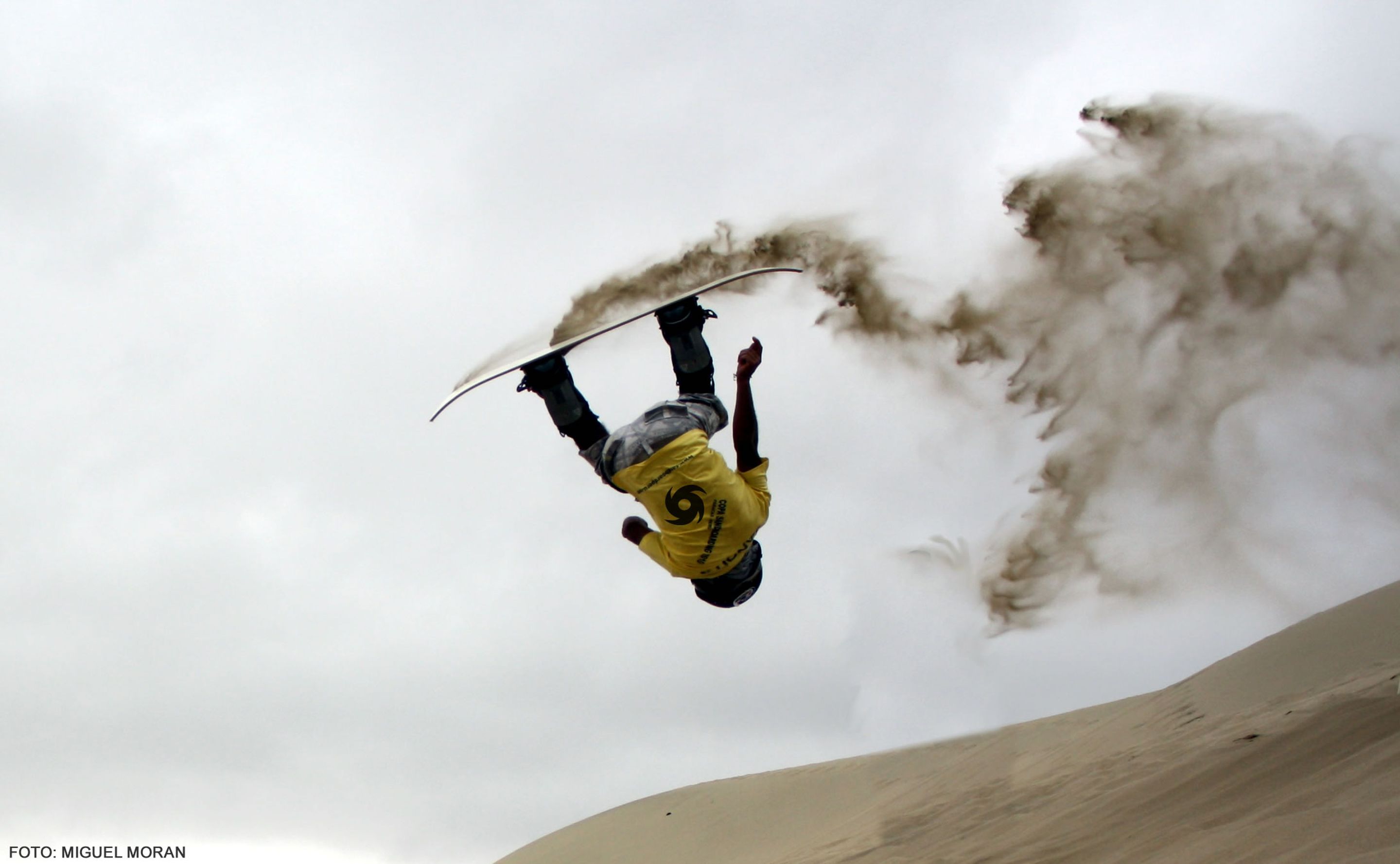
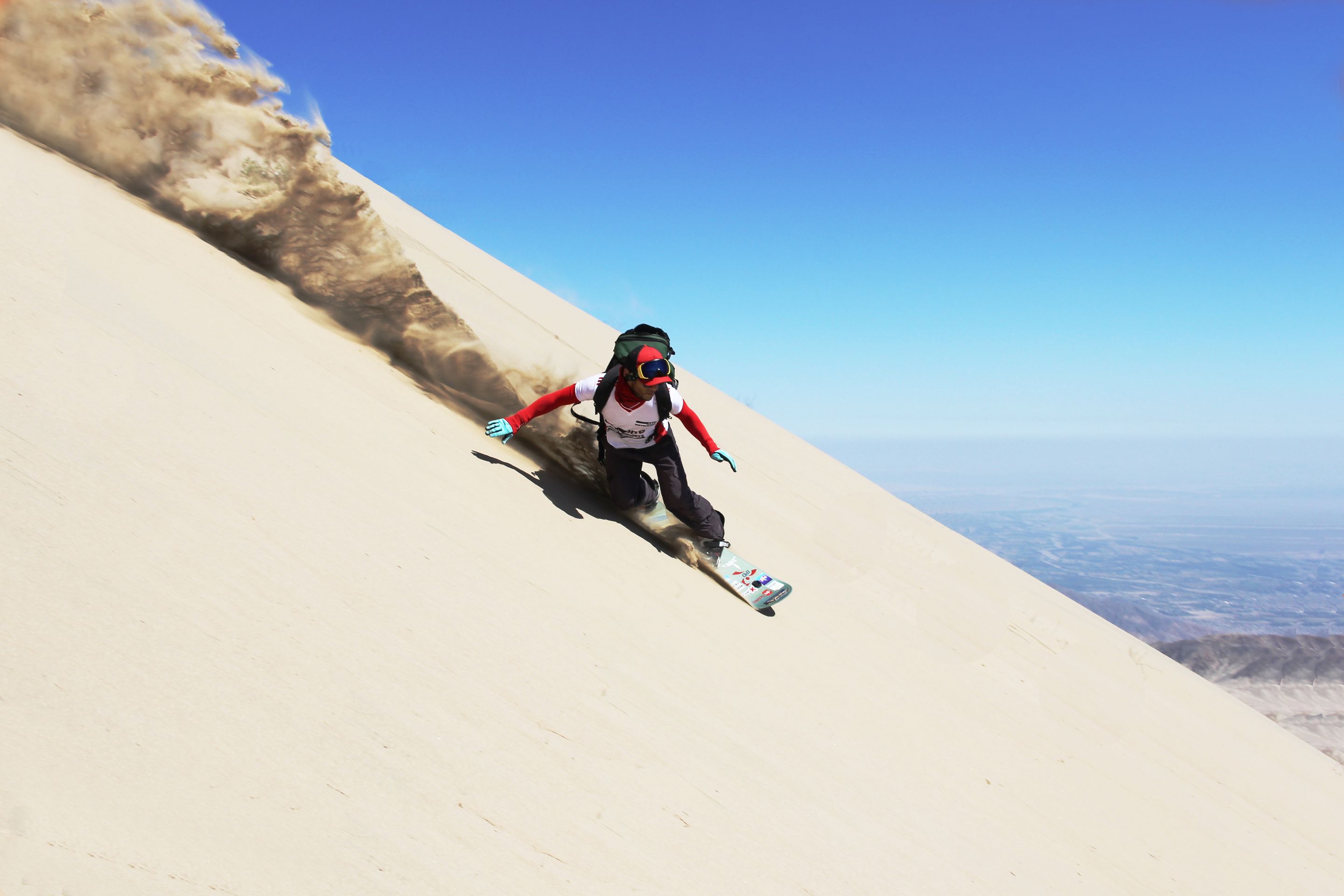
Chavez grew up in the oasis village of Huacachina, near Ica in Peru. The village is set among huge sand-dunes, where the young Dito started sliding on a wooden board.
“When I was 10, I watched young guys on TV sliding down snowy mountains and from that moment on my dream of trying snowboard began,” he says. “When I finally did it, it was amazing and it changed my life for ever.”
Because Chavez came from a sandboarding background, he has had to adapt his technique to Snowboard Cross.
“I could say that the feeling of sandboarding would be more like sliding on very wet, sticky snow," Chavez explains.
He says even after years of snowboarding, he still finds it more natural to put the weight on his back foot, and has had to train hard to correct.
Adapting to colder temperatures, and gaining the necessary fitness for the longer runs involved in Snowboard Cross, are also challenging for the sandboarder, Chavez says.
However, he is addicted to the adrenalin of snowboarding – the turns, jumps and racing other riders – as well as the sportsmanship and camaraderie in the sport.
Overcoming obstacles
Chavez says making his debut at the World Cup has always been a goal, but also a struggle.
“I don't have any ski resorts in Peru, nor do I have a winter sports federation, which means I can't receive a budget from Peru to race the tournaments in South America, North America, and Europe. Therefore, I have to secure all the funding on my own, working at my sandboard and sand ski shop in Peru,” he explains.
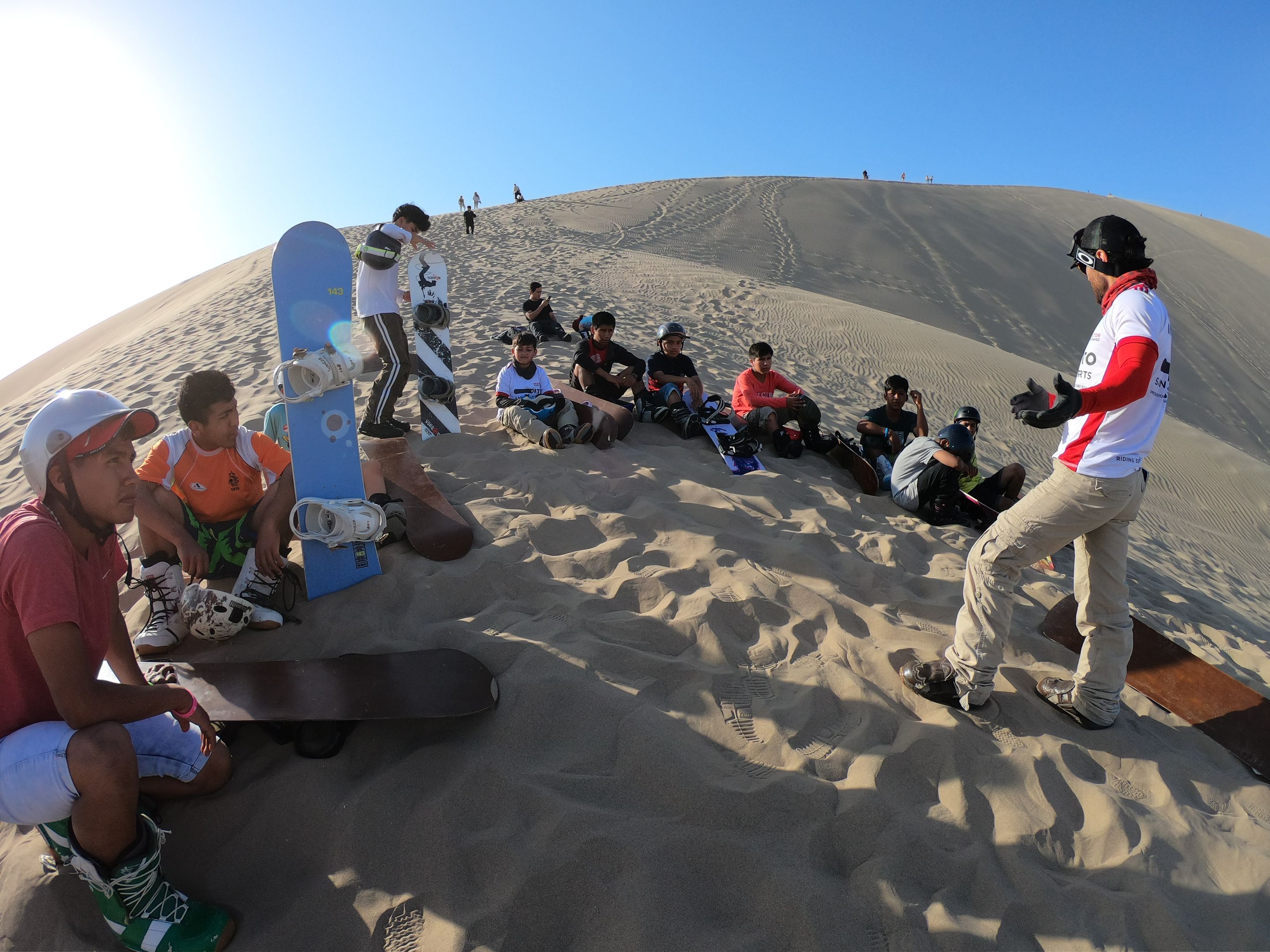
He has also had help from local sponsors, fundraising activities, and coaches including Argentina’s Nano and Maxi Cataldi and Diego Linares, and François Olivier, Toc Bletry, and Mathieu Siboni from the Back to Back Club in Isola 2000 in France.
“All of that is a huge challenge behind the competition that nobody sees," says Chavez.
“I truly hope that one day my country can also help me with a budget, which is the most difficult thing to get, especially because snowboarding in Peru is not a traditional sport," he says.
But sandboarding is popular in Peru, among both locals and tourists.
“That is why I have strategically used it as an initiation sport for snowboarding in order to make it known in my country, and now, after 16 years of marketing work, the Peruvian press is finally talking about snowboarding after my participation in the World Championships and now with my debut in the World Cup,” says Chavez.
Building confidence
Chavez competed at both the 2019 and 2023 World Championships in Solitude and Bakuriani, and was entered at the 2021 and 2025 World Championships in Idre Fjäll and Engadin, although he did not start.
He says those experiences set him up for Cervinia and a big race on a big course, although he finished last in qualification.
Riders Chavez admires include the likes of Lucas Eguibar, Omar Visintin, Tomasso Leoni, Pierre Vaultier, Merlin Surget, Alessandro Haemmerle and Eliot Grondin. He picks out the USA’s Nick Baumgartner in particular.
“At 43 years old he is still racing in the high level so he is proof that if you prepare physically in the best way, you can maintain a high competitive level even as the years go by,” Chavez says.
“I also like to watch videos of Luca Matteotti, who was not that tall in stature and was not that heavy, but who had great technique and that compensated a lot for him.”
Chavez admits his height and weight – he is just 65 kilograms – count against him, but he is determined to overcome those barriers just like the others he has faced.
“I try to copy many things of the best riders, specially those ones who are not so tall, but at the end of the day I know I have my own snowboard style, maybe it’s the style of a sandman,” he jokes.
“But seeing everything I have been able to achieve despite all the barriers, and after many people told me I couldn't do it and that I was crazy for dreaming of something impossible, all of that motivates me to keep believing in myself, even if I advance at a snail's pace.”
Fighting on
Chavez is still dreaming of an Olympic start, despite the obstacles.
“Sometimes I want to give up, but then that inner child of mine who dreamed of snowboarding comes out and tells me, 'Keep going no matter what happens’,” he says.
And he has another driver: the memory of his girlfriend Rosanita, who passed away four years ago after an accident.
“She is now my biggest inspiration to keep fighting,” Chavez says.
So look out for Peru’s only Snowboard Cross rider at the rest of the season’s World Cups: he says he is well into training for the next races in Dongbeiya, where he will keep on fighting for his dreams.
)
)


